There are few moments in homeownership quite as dramatic as turning on the kitchen faucet expecting a cool glass of water, only to be met with a pathetic hiccup and a dry hiss.
If your home relies on a private water well, losing water pressure or hearing your pump hum continually without water running usually points to one common issue: your pump has lost its prime.
Before you panic and envision days of washing dishes with bottled water, take a deep breath! Priming a well pump is a standard maintenance skill every well owner should understand. Here is your friendly, step-by-step guide on how well pump priming works, why it happens, and how to get your water flowing smoothly again.
What Does Priming a Well Pump Actually Mean?
Think of a water well pump like drinking through a straw. If the straw is full of water, pulling more liquid up is effortless. But if air leaks into that straw, you end up sucking air instead of water.
Most well pumps (especially jet pumps) are not self-priming. They rely on a continuous column of water inside the pump housing and suction pipes to create the vacuum needed to draw water up from deep underground. When that water drains out and is replaced by air, the pump loses its grip, also known as its prime.
Common Reasons Your Pump Might Lose Prime:
- Power Outages: A sudden power loss can cause pressure changes that allow water to drain back into the well.
- A Faulty Check Valve or Foot Valve: If this one-way valve wears out, water slips back down into the well whenever the pump turns off.
- Air Leaks in the Suction Line: Even a microscopic hole in a pipe joint can draw air into the system.
- Low Water Table: During dry summer months, water levels in the well may drop temporarily below your intake pipe.
Step-by-Step: How to Prime Your Water Well Pump
⚠️ Safety Note First: Always disconnect electricity to electrical equipment before performing manual maintenance. If you are ever uncomfortable working with electrical plumbing equipment, give us a call!
Step 1: Turn Off the Power
Locate the circuit breaker powering your well pump and flip it off. Running a well pump dry without water causes intense friction and heat, which can permanently burn out the motor bearings and impellers.
Step 2: Prepare Clean Water
You will need an external source of clean water to pour into the pump. Keep a couple of litres of clean, bottled or pre-stored water handy. Do not use dirty stream or garden runoff water, as debris can clog internal valves.
Step 3: Locate the Priming Port
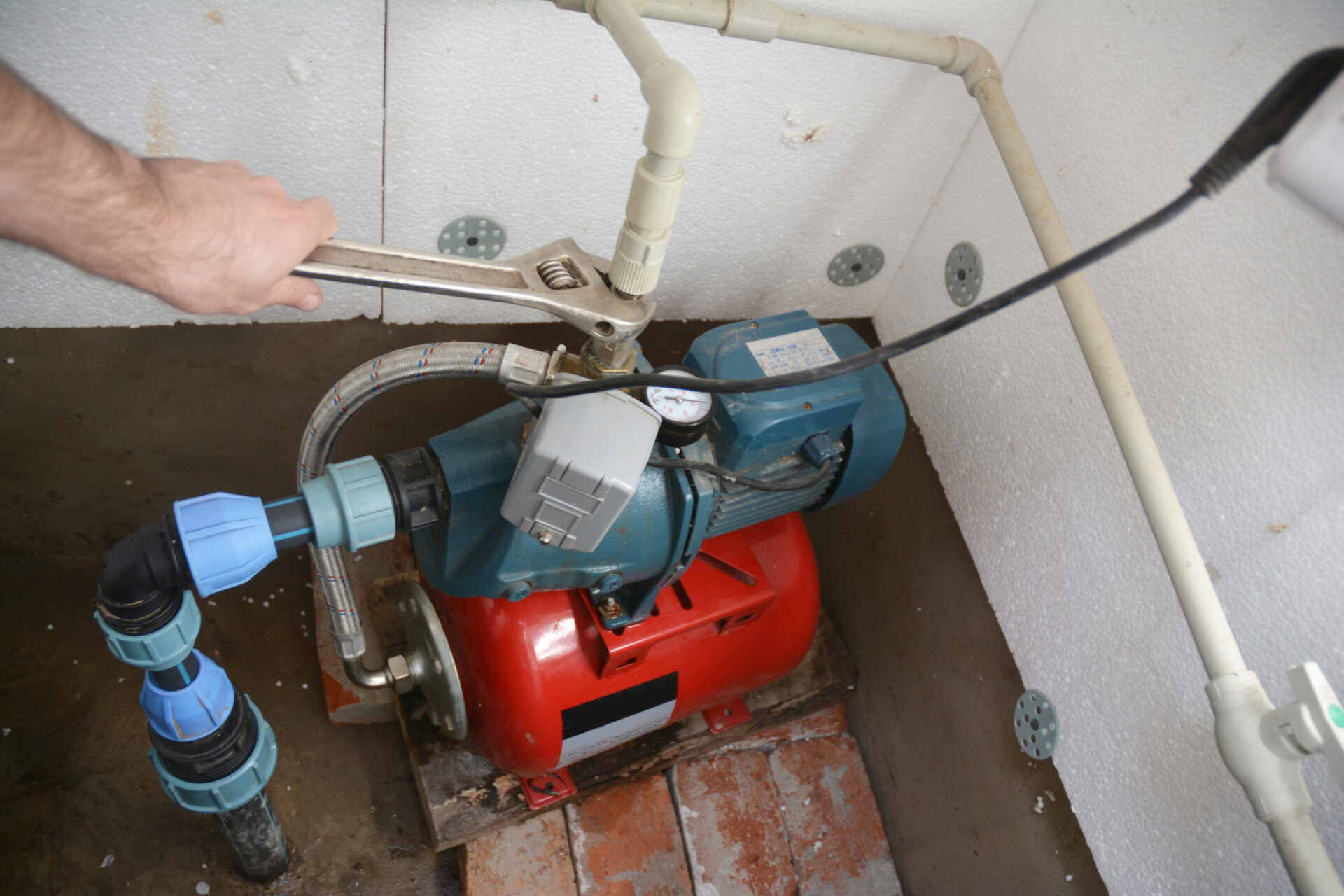
Find your well pump assembly (usually located in your basement, crawlspace, or well house). On top of the pump housing, you’ll see a removable plug or bolt known as the priming port.
Step 4: Remove the Plug & Fill the Chamber
Unscrew the priming plug using a wrench. Place a funnel into the port and slowly pour your clean water directly into the opening. You are filling both the pump housing and the suction pipe connected to the well. Keep pouring until water rises to the top of the opening and remains at a steady level.
Step 5: Re-seal the Plug
Wrap the threads of the priming plug with fresh Teflon plumber’s tape to ensure an airtight seal, then screw it securely back into place. Remember: air is the enemy of pressure!
Step 6: Restore Power & Test
Turn the power back on at the breaker panel. The pump motor should turn on. Watch the pressure gauge on your tank:
- If the pressure rises steadily and shuts off automatically around 40–60 PSI, congratulations, you’ve successfully primed your system!
- If the pump runs for a minute or two without building pressure, turn off the breaker immediately and repeat the priming process once more.
When Should You Call the Experts?
If you’ve tried priming your pump twice and it still won’t catch, or if your pump loses its prime every few days, you’re likely dealing with a deeper underlying issue such as a failed foot valve, a cracked pipeline, or a failing pressure tank bladder.
At Plumbing Dunn Right, well systems are our specialty. Whether you need a quick system diagnosis, water treatment upgrades, or emergency no-water repair, our friendly technicians bring the right tools, deep experience, and clear explanations straight to your front door.
Need help with your well pump or water pressure? Schedule an appointment or give us a call today!